
The Billboard Latin and Billboard Español edit teams rank the ultimate Spanish-language pop songs from Y2k to now.
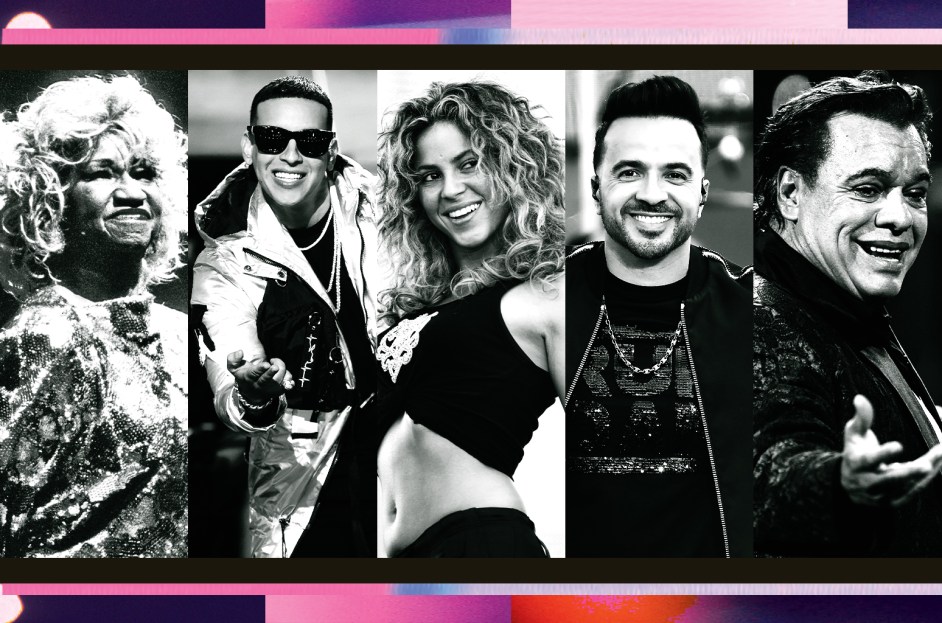
Celia Cruz, Daddy Yankee, Shakira, Luis Fonsi & Juan Gabriel
Gie Knaeps/Getty Images; Alexander Tamargo/Getty Images; Pascal Le Segretain/Getty Images; Debra L Rothenberg/WireImage; Michael Tran/FilmMagic
Our list of the best 50 Latin pop songs of the 2000s is culled from the collective input of our Latin editorial team. While the list is meant to be a compilation of pop recordings, it includes songs in other genres — tropical, regional Mexican, reggaetón — that were so impactful that they entered the realm of pop culture, regardless of genre.
While the definition of “pop” can be argued endlessly, what’s not arguable is that “pop” in music means popular. These are songs that are recognizable in the very broad stylistic and geographical universe of Latin music; obscure works or deep cuts, no matter how merit-worthy, are not on this list.
But, broad recognition alone didn’t translate to inclusion on this list. Our choices had to truly meet the definition of a great pop song: Catchy, hooky, beautifully crafted, compelling lyrics, universally appealing, innovative.
In compiling this list, we wanted to focus on the new century, the time period when Latin music truly began to become global, and have only included tracks released from 2000. Do not cry for 1999 releases; they are not on this particular list.
We focused on enduring tracks, those that sound as fresh and relevant today as they did the day we heard them for the first time. Standing the test time matters.
Other criteria we took in mind was inclusivity. Although some artists boast multiple masterpieces, in order to widen the scope of our list and allow for more artists to be part of it, we limited representation to one song per artist, with the exception of key collabs. Last, but certainly not least, a song’s cultural and musical impact affects its placement in the rankings. Enjoy and pick your favorites!
-
Manu Chao, “Me Gustas Tú” (2001)
Few other feel-good songs are as whimsical as “Me Gustas Tú.” Solely crafted by Manu Chao, a French singer of Spanish descent, the song’s charm lies in the fusion of cultures and genres, and its bohemian flair. Its kitschy beats find the intersection between tropicalia, rock and roots reggae in a whole new approach that’s instantly identifiable as Chao’s signature nasally sound. Released in 2001, “Me Gustas Tú” was part of a wave of alternative acts, including Julieta Venegas, who wanted to buck Latin pop’s conventions in the wake of the so-called “Latin Explosion” of 1999. The song reached No. 1 in Spain and Italy, and peaked at No. 27 on Billboard’s Latin Pop Airplay chart. — ISABELA RAYGOZA
-
Rosalía, “Malamente” (2018)

Image Credit: Courtesy Photo 2018’s forward-thinking “Malamente” introduced Rosalía to the world, a then-budding and brilliant Barcelona star, who would eventually become one of the most compelling flamenco-pop experimentalists on the global Latin music map. In fact, this single — from her Latin Grammy-winning El Mar Querer — not only marked a departure from the prevailing, dominant discourse of reggaetón but also disrupted the musical landscape with an unlikely sound, drawing inspiration from centuries-old Spanish literature. The world she conjures in “Malamente” — co-produced by El Guincho and Rosalía herself — is a spellbinding haze, filled with staccato hand claps and her seductive coo, as she sings about her dreams, broken crystals, the stars and the moon. The song went platinum in Brazil, Mexico and the U.S., and 5x platinum in her native Spain. — I.R.
-
Alejandro Sanz, “No Es Lo Mismo” (2003)
Alejandro Sanz has long sought to give depth and complexity to pop music. Released in 2003, “No es lo Mismo” showcases his musical mastery. With contrasting lyrics where the Spaniard philosophizes about society, the song offers food for thought on a brilliant platter from prodigious musicians, including Vinnie Colaiuta (drums) and Anthony Jackson (bass), and delivery from Sanz’s unmatched voice. Winner of the Latin Grammy for song of the year and record of the year in 2004, “No es lo Mismo” also achieved success on the Billboard charts, reaching No. 3 on the Latin Pop Airplay and No. 4 on the Hot Latin Songs charts. — LUISA CALLE
-
Camilo, “Vida de Rico” (2020)
With the first single from his second studio album, Mis Manos, Camilo made it clear that his initial success was no accident. In “Vida de Rico”, a cheerful cumbia written and produced by Camilo and Edgar Barrera, the Colombian singer-songwriter offers his beloved everything he has, even if it’s not a fortune. With his wordplay and focus on melody, Camilo managed to introduce a new version of Latin pop that was rarely heard before — youthful and simple, but also beautifully crafted. The song debuted in September 2020, in the times of the COVID pandemic, and reached No. 1 on the Latin Airplay and Latin Pop Airplay charts. It also entered the top 10 of Hot Latin Songs and appeared on the Billboard Global Excl. U.S. and Billboard Global 200 international charts, where it spent a total of 30 and 24 weeks, respectively. It also won the Latin Grammy Award for best pop song in 2021. Its homemade music video, starring Camilo, his wife Evaluna and some relatives and friends, is as sweet as the tune, and also showed a new simple and vulnerable side of pop. — SIGAL RATNER-ARIAS
-
Ariel Camacho y Los Plebes del Rancho, “Te Metiste” (2014)
Today, sierreño music is a popular style embraced by artists such as Natanael Cano, Junior H and Eslabon Armado. But it was late Mexican singer Ariel Camacho who popularized the regional Mexican subgenre, with songs like “Te Metiste,” nearly 10 years ago. Bolstered by sentimental requinto chords and a vibrating pumping tuba, Camacho’s ability to convey deep emotions via complex acoustic guitar solos in “Te Metiste” inspired a whole new generation of regional Mexican artists to learn to play instruments. Besides its lasting impact on the genre, the deeply emotional song also earned Ariel Camacho y Los Plebes their first No. 1 on the Regional Mexican Airplay chart. — GRISELDA FLORES
-
Luis Enrique, “Yo No Sé Mañana” (2009)
Meant to “propose a philosophy of life […] to make people think and dance,” as Luis Enrique previously told Billboard, “Yo No Sé Mañana” (Top Spot Music) has become a timeless salsa track. With wise lyrics (penned by Jorge Luis Piloto and Jorge Villamizar) about living for the moment, the tropical hit not only preserved the Nicaraguan artist’s salsa romantica but it also marked his triumphant comeback after years of not having a hit. It was also a triumphant comeback for romantic salsa, which changed the course of tropical music in the 1990s. In 2009, “Yo No Sé Mañana” peaked No. 6 on the Hot Latin Songs chart (his highest-peaking single since “Lo Que Es Vivir” in 1992) and topped the Tropical Airplay chart for 11 weeks (his first No. 1 hit since “Así Es La Vida” in 1994). The banger nabbed the “Prince of Salsa” the best tropical song award at the 10th annual Latin Grammys, and tropical airplay song of the year at the Billboard Latin Music Awards. — JESSICA ROIZ
-
Bad Bunny, “Yo Perreo Sola” (2020)

Image Credit: Courtesy Photo While Bad Bunny has delivered a seemingly endless parade of hits over the past five years, “Yo perreo sola” broke ground musically, aesthetically and culturally. The popular reggaetón hit –which topped the Latin Airplay charts for two weeks in June 2020 and comes from his YHLQMDLG album — celebrates independent women who are able to party alone, and kicked off a long list of tracks by men that sought to “empower” women. None were quite this effective, however. The track features the voice of Puerto Rican artist Nesi (real name Genesis Rios), and its video showcases Bad Bunny in drag as the protagonist, aiming to break the stereotype of women as sexual objects in the genre. “He wanted to symbolize that men also care about women’s rights and that violence against women also affects us as men,” video co-director Stillz previously told Billboard. “He wanted to make something fun and unique that impacted the world, but he wanted to impact and take a message to the reggaeton community that usually is not as open to speak about the LGBTQ community.” — INGRID FAJARDO
-
Ricky Martin, “Tal Vez“ (2003)
After five years without recording in Spanish, Ricky Martin made his return to Latin music with this powerful pop ballad written by Franco de Vita and produced by Tommy Torres. Included on his album Almas del Silencio, “Tal Vez” — in which the singer sadly weighs what he may have done or not done in the face of the imminent end of a relationship — debuted in April 2003 at No. 1 on the Billboard Hot Latin Songs chart, reigning for 11 weeks. It is the longest for the Puerto Rican superstar has spent to date at the top of the chart, surpassing all 10 of his other No. 1s — even 1999 megahit “Livin’ La Vida Loca,” which led for nine weeks. The success of the song emphasized the importance of romantic music, on the one hand, and of Martin as a transcendental artist. — S.R.A.
-
Marco Antonio Solís, “O Me Voy o Te Vas” (2001)
With his unmatched ability to hit whirling highs and devastating lows with only his voice, Marco Antonio Solís delivers the full range of his golden pipes on “O Me Voy o Te Vas.” In the realm of Latin balladry, the song stands as a magnum opus, showcasing the Mexican singer-songwriter’s unparalleled vocal prowess. With its range of emotions, the song helped Solís, who was originally the lead singer of Mexican grupera band Los Bukis, further cement his solo career, after the megahit “Si No Te Hubieras Ido.” The meteoric rise of “O Me Voy…” to No. 1 on Hot Latin Songs attests to its universal resonance. — I.R.
-
Ozuna, “El Farsante” (2017)
In the midst of the booming Latin Trap movement of 2017, led by artists such as Bad Bunny and Bryant Myers, Ozuna (who also jumped on some trap bangers) delivered a devout Latin R&B track called “El Farsante” (The Faker). The Puerto Rican artist — who at the time was ushering in a new generation of reggaetón stars to revive the genre — oozed passion, with lyrics trying to win back the love of his life: “If you still love me like before/ Nothing seems interesting to me anymore/ I know that in love I am a fake/ Without you I won’t fall in love again baby,” he chants in his potent, sugary vocals. Considered one of Ozu’s most emblematic tracks, “El Farsante” was later remixed with Romeo Santos, with the new version peaking at No. 2 on Hot Latin Songs and at No. 6 on Latin Rhythm Airplay in 2018. Its telenovela-inspired music video currently boasts nearly two billion views on YouTube. — J.R.
-
Jenni Rivera, “Parrandera, Rebelde y Atrevida” (2005)

Image Credit: Michael Tran/FilmMagic Jenni Rivera was a girl’s girl through and through, and her music was no exception. Following her groundbreaking female banda anthems “Las Malandrinas” and “La Chacalosa,” one could argue her breakout album was 2005s Parrandera, Rebelde y Atrevida, led by the single of the same name, a riveting, go-to anthem quickly adopted by women who were both powerful and empowered. Raw, honest and unapologetically herself, the late Mexican American superstar boasted about a rebellious lifestyle — something no other woman in regional Mexican was singing about at the time. With no interest in being a good girl, Rivera declares “I am your mother, queens, wild and dangerous ones, I’m here.” She was definitely describing herself. — G.F.
-
Juan Luis Guerra, “La Llave de Mi Corazón” (2007)
In the best style of Juan Luis Guerra, “La Llave de Mi Corazón” made us dance and smile in 2007, when it debuted as the title track to the tenth album by the Dominican maestro and his group 4.40. Not only was it his first big hit of the millennium, but a return to his roots after the 2004 Christian album Para Ti, with a fresh “mambo merengue” sound. This tropical pop song with a ’50s flavor, fun lyrics and masterful arrangements exemplifies Guerra’s capacity to fuse past and present, and gave him his fourth No. 1 on Billboard’s Hot Latin Songs, while also topping the Latin Airplay and Tropical Airplay charts. It was crowned song of the year, record of the year and best tropical song at the Latin Grammys that year. Just as fun is the English version of the song, “Medicine for My Soul,” also included on the album. — S.R.A.
-
Thalia, “No Me Enseñaste” (2002)
“No Me Enseñaste” is widely regarded as one of the most powerful ballads in Spanish pop, and it remains one of Thalia’s greatest hits. The song reached No. 1 on Billboard‘s Hot Latin Tracks chart and remained at the top of Latin Airplay for two weeks at No. 1 during Oct-Nov. 2002. The soaring melodies and heart-wrenching lyrics perfectly showcase the superstar’s ability to switch between dramatic ballads and upbeat tracks. Written by hitmaker Estéfano at the height of his popularity, along with Julio Reyes Copello, “No Me Enseñaste” epitomizes the power and pathos of female-led pop at a time when the music ruled the charts, making it an unforgettable contribution to the Latin pop genre. — I.F.
-
Alejandro Fernández, “Me Dediqué A Perderte” (2004)
Vicente Fernández’s son crafted a whole new lane for himself by using his exceptional vocal command of traditional rancheras and romantic pop songs to pioneer a blend of the two, earning a massive following throughout his career. Few songs exemplify the mix of tradition and balladry better than the beautiful “Me Dediqué A Perderte,” which debuted at the top of the Hot Latin Songs chart. This heartbreak classic has sweet melodies and precise lyrics, and the acoustic guitar and violin accompaniment beautifully complements the story of someone who unintentionally ends their partner’s love without realizing it. The song was penned by Leonel Garcia, the singer-songwriter who is one half of the popular duo Sin Bandera, underscoring how contemporary and traditional can come together. — I.F.
-
Carlos Vives, “Volví a Nacer” (2012)
Carlos Vives experienced a rebirth of sorts in the early 2010s — with his first album of original music in almost a decade and his blossoming relationship with now-wife Claudia Elena Vásquez — and he captured it beautifully in this joyous vallenato released in 2012. Written and produced by the Colombian star and Andrés Castro, and included on Vives’ 2013 album Corazón Profundo, “Volví a Nacer” is one of his most exciting and personal songs to date. It reached No. 1 on multiple Billboard charts, including Hot Latin Songs, Latin Pop Airplay, Latin Airplay and Tropical Airplay, and it won song of the year and best tropical song at the 2013 Latin Grammy Awards, returning him to his position as the great world ambassador of Colombian music through the decades. — S.R.A.
-
Ivy Queen, “Quiero Bailar” (2003)

Image Credit: Courtesy At a time when men completely dominated the reggaeton scene, Ivy Queen broke stereotypes in every sense: a woman in a male-dominated genre, one who didn’t conform to stereotypes of over sexuality, and whose lyrics centered on romance and female empowerment. It took Ivy a full decade to get onto the Billboard charts and she did it with “Quiero Bailar” (I want to dance) in 2005. The Jamaican riddim-infused reggaetón track has stood the test of time thanks to its unapologetic lyrics — composed by Ivy herself — where she makes it clear that dancing and having a good time with a man at a club does not automatically mean she consents to sex. The anthem was the first reggaetón track by a female artist to enter the charts, reaching No. 8 on Billboard’s Latin Rhythm Airplay listing and paving the way for women in the genre. — J.R.
-
Julieta Venegas, “Andar Conmigo” (2003)
“Andar Conmigo”, the creative fusion of pop with ranchera by Julieta Venegas, transcended borders with its daring story and accordion melody. With her signature, sweet voice, Venegas weaves a narrative about a woman who dares to take the initiative in front of someone she likes and that still resonates with listeners around the world. Written by Venegas along with Coti Sorokin (who also co-wrote Diego Torres’ “Color Esperanza”), the song released in 2003 was one of the Mexican artist’s first forays into the Billboard charts, and was perhaps the first track by an “alternative” female artist to enter the Billboard charts. It reached No. 17 on Latin Pop Airplay in 2004. — L.Calle
-
Ricardo Arjona, “El Problema” (2002)
Ricardo Arjona’s “El Problema” expresses complex interpersonal emotions by using simple yet powerful descriptions. Each verse concentrates on an unsolvable problem within the relationship, articulated with the succinctness of an ad. Written by the Guatemalan singer-songwriter, this song is a fascinating way to examine and answer one’s own questions through its verses — and is also an example of elevated, yet commercially successful songwriting. This poetic approach is a testament to Arjona’s composition skills, and is also his top-performing song on Billboard’s Latin Airplay chart, where it remained at No. 1 for eight consecutive weeks in 2002. — I.F.
-
Christian Nodal, “Adiós Amor” (2017)
Mariachi had been considered the realm of an older generation until Christian Nodal infused it with youth. At only 18 years old, the newcomer captivated the hearts of many with his strong, powerhouse vocals and mature lyricism, as heard in his 2017 breakthrough single “Adiós Amor” (Goodbye, love). The track—which is an original composition by Salvador Garza and was first recorded in banda by Los Dareyes de la Sierra in 2008 — narrates the story of a person who’s ending a relationship after being betrayed. Beyond its heartbreaking lyrics, “Adiós Amor” put Nodal’s innovative “mariacheño” (a mix of mariachi and norteño) musical style on the map. The track earned the Sonora-born singer-songwriter his first No. 1 on the Regional Mexican Airplay chart, where it ruled for seven weeks in 2017. To date, it’s his longest-leading title, along with 2019’s “De Los Besos Que Te Di.” — J.R.
-
Gustavo Cerati, “Crimen” (2007)

Image Credit: Courtesy Photo Gustavo Cerati’s impact on Latin rock transcends Soda Stereo, as is evident from his solo gem, “Crimen.” With a whirlwind yearning vocal delivery, Argentina’s musical maverick captures hearts through poignant storytelling amid otherworldly piano arrangements. The 2006 song explores the devastation of heartbreak with gut-wrenching poetry, bearing witness to the “criminal” action of feeling such a way. Its acclaim is underscored by its award wins, including best rock song at the Latin Grammys and MTV VMAs in 2007, and song of the year at Argentina’s Premios Gardel — attesting to the song’s mastery and solidifying Cerati’s enduring legacy. — I.R.
-
Chino y Nacho, “Mi Niña Bonita” (2010)
A new tropical pop classic was introduced with the bright metallic tones of a trumpet. Penned by producer Richy Peña along with a young duo from Venezuela, Jesús Alberto Miranda (Chino) and Miguel Ignacio Mendoza (Nacho), the lively beats and romantic lyrics of “Mi Niña Bonita” captivated audiences in 2010 and introduced a new brand of tropi-pop to the market. “Mi Niña Bonita” was not only Chino and Nacho’s debut single in the United States, but also gave them their first No. 1 on Hot Latin Songs, staying on top for three consecutive weeks in May 2010. The lyrics blend beautifully with an endearing melody and a rhythmic vocal pattern (“shuba, shuba, shuba”) for the chorus, evoking nostalgia and marking the beginning of a significant era in merengue pop music. — I.F.
-
Pedro Capó, “Calma” (2018)
Eleven years after kicking off his career in 2007, Capó earned his first major hit: “Calma.” Penned by the Puerto Rican artist alongside Gabriel Edgar González Pérez and George Noriega, the laid-back reggae tune is powered by feel-good lyrics about relaxing at the beach, opening a beer, and enjoying the little things. In 2019, “Calma” scored the then-39-year-old Capó his first No. 1 on the Latin Airplay and Latin Pop Airplay charts, as well as a No. 3 peak on Hot Latin Songs. It also nabbed the coveted song of the year award at the 2019 Latin Grammys, and received remixes with Farruko and Alicia Keys. — J.R.
-
Natalia Lafourcade, “Hasta La Raíz” (2015)
Natalia Lafourcade’s “Hasta La Raíz,” which also titled her critically acclaimed 2015 studio album, captures the Mexican singer-songwriter’s lyrical maturity that came from tracing her roots, as the song’s name would suggest. Melding blissful riffs of huapango with her signature alt-pop sound, “Hasta La Raíz” is an honest ode to the experiences, journeys and lessons learned that have shaped who she is today. Penned by Lafourcade and Mexican singer-songwriter Leonel García (of Sin Bandera), it went on to win song and record of the year at the 16th annual Latin Grammy Awards. — G.F.
-
Maluma, “Hawái” (2020)

Image Credit: Courtesy Photo Maluma was already a global star pre-“Hawái,” but the song — which explores a breakup in the age of Instagram — took him to a whole other level. Released in 2020, “Hawái” became the first track to top Billboard’s new Global Excl. U.S. chart, and in 2023 it surpassed one billion views on YouTube. Written by Maluma, Keityn, Edgar Barrera and Bull Nene, the track is highlighted by an enveloping chord progression that also caught the attention of The Weeknd, resulting in an epic remix. The bilingual collaboration with the Canadian star helped the song climb to No. 12 on the Billboard Hot 100, and opened the door to a new era of bilingual collabs. — L.Calle
-
Rauw Alejandro, “Todo De Ti” (2021)
Rauw Alejandro “took a risk,” as he told Billboard in 2021, when he unleashed “Todo de Ti” — a contrast to his edgy reggaetón and R&B fare. The track broke ranks with everything going on in reggaetón at the time, and became Rauw’s grooviest and biggest hit to date. Helmed by producer Mr. NaisGai and co-penned by Rauw and Rafa Pabon, “Todo” is backed by a retro disco groove and lyrics about liking everything about that special someone. A summer anthem, the track earned the chameleon Puerto Rican artist his first entry on the Billboard Hot 100, as well as his best chart performance on Hot Latin Songs, peaking at No. 2 in Sept. 2021; and his longest-leading charting title on the Latin Airplay chart, ruling for three weeks at No. 1. It also opened the door to more experimentation within Latin urban music. — J.R.
-
Paulina Rubio, “Ni Una Sola Palabra” (2006)
With its gripping pop-rock sensibility and acoustic-electronic music interplay, “Ni Una Sola Palabra” (2006) fuses traditional elements with contemporary production, courtesy of Cachorro López. Penned by Xabi San Martín, La Chica Dorada’s poignant narrative delves into the loneliness of love lost, juxtaposing sad girl lyrics with cheerful rhythms. It not only solidified Rubio’s status as a Latin pop icon but also reinforced the international appeal of Latin music well into the new millennium. Debuting at No. 98 on the Billboard Hot 100, the song encapsulates a transformative moment, underscoring the evolving sound of Latin pop in the 21st century at a time when Latin women were a strong chart presence backed by top-notch songs. — I.R.
-
Wisin y Yandel, “Rakata” (2005)
Wisin y Yandel’s “Rakata” marked a pivotal moment in reggaetón’s evolution in its first international wave in the mid-2000s. Written by Francisco Saldaña, Josias de la Cruz, Wisin and Yandel, and produced by Nely, the pair’s magnetic synergy injected unparalleled energy into the genre. “Rakata” wasn’t just a hit; it was a sonic revolution. Its infectious dancefloor beat, combined with the duo’s dynamic delivery, propelled the song beyond the Latin charts, entering the all-genre Hot 100 and peaking at No. 85. It was an early showcase of reggaetón’s universal appeal, proving that the genre could resonate with diverse audiences. — I.R.
-
Cristian Castro, “Azul” (2001)

Image Credit: Courtesy Photo Whether it’s the more-than-50 times that the word “azul” (blue) is repeated in this song, the wonderful vocal technique of Cristian Castro or the exciting choruses and guitar solos, but more than two decades later, “Azul” is still in our heads, making us sing every time it plays at a party or karaoke. Written by Gustavo Santander and Kike Santander and produced by Kike, Andrés Munera and Fernando “Toby” Tobón, the song was released in 2021 as part of Castro’s album of the same name and quickly became a summer anthem. It gave the Mexican singer his fifth No. 1 on Hot Latin Songs, topping the chart for nine weeks between June and August of that year. — S.R.A.
-
Calle 13, “Atrévete-Te-Te” (2005)
From Visitante’s captivating alt-cumbia-urbano beats to Residente’s unflinching rap bars, this 2005 breakthrough hit revolutionized the reggaetón landscape in the 2000s. Calle 13’s departure from the prevalent hedonism of urbano music at the time marked a seismic shift in the genre’s trajectory. Brimming with unbridled raunch, humor and ingenious quips, “Atrévete-Te-Te” emerged as a genre-defying masterpiece that shattered traditional reggaetón norms. The song entered several Billboard charts, and its accompanying video, with an aesthetic as disruptive as the music, earned the group a Latin Grammy for best short form music video. — I.R.
-
Chayanne, “Y Tú Te Vas” (2002)
Penned by the great Franco De Vita, “Y Tú Te Vas” became the ultimate heartbreak anthem thanks to agonizing lyrics that come alive with Chayanne’s emotional delivery injecting pathos into every single verse. The song is gut-wrenching, to say the least, with Chayanne vividly singing about life without that great love. “Y Tú Te Vas” scored the Puerto Rican star his sixth No. 1 on Hot Latin Songs, where it spent seven weeks on top, becoming his longest-leading title. — G.F.
-
Farruko, “Pepas” (2021)
Before becoming a born-again Christian, Farruko penned the 2021 summer anthem “Pepas,” a provocative guaracha banger about getting lit on the dance floor. Equipped with hypnotic trumpet riffs and EDM-styled beats (thanks to IAmChino, Sharo Towers, K4G, Ghetto and more), the track resonated at global festivals and urban corners alike, becoming a worldwide banger, not just a música urbana hit. Surging to become Farruko’s first No. 1 on Hot Latin Songs, it showcased the reggaetón artist’s versatility, seamlessly transitioning between mellifluous croons and dancehall-style toasting. Amidst the contagious rhythm, the Puerto Rican artist elevated the guaracha subgenre to unprecedented heights, affirming his status as one of the most multifaceted vocalists in the tropical urban landscape. — I.R.
-
Romeo Santos, “Propuesta Indecente” (2013)

Image Credit: Courtesy Photo Since its release in 2013, Romeo Santos’ “Propuesta Indecente”’ continues to be a force to reckon with. Marking the first single from his Formula, Vol. 2 album — also home to the Drake-assisted “Odio” — ”Propuesta” delivers seductive lyrics about “an adventure that’s more fun when it smells like danger.” Elegantly lacing bachata with tango, “Propuesta” took bachata to new directions, further internationalizing a strictly Dominican genre, and cementing Santos’ stature as a global act who sang local music. The track earned Santos his fifth No. 1 on the Hot Latin Songs chart and spent 14 weeks at No. 1 on the Tropical Airplay chart between 2013 and 2014. Moreover, the sultry tune made history in 2015 as the first song to spend 100 weeks on the Hot Latin Songs chart. The music video, which stars Mexican actress Eiza González as Santos’ love interest, became only the second music video by a Latin artist to hit 1 billion views on YouTube, following Enrique Iglesias’ “Bailando” with Gente de Zona and Descemer Bueno. — J.R.
-
Nicky Jam & Enrique Iglesias, “El Perdón” (2015)
Nicky Jam had a spectacular and lasting comeback – after his promising career had derailed a decade earlier due to drug and alcohol abuse – with the release of “El Perdón,” along with Enrique Iglesias. Written by Jam, Iglesias, Cristhian Mena and Juan Diego Medina Vélez, and produced by Carlos Paucar, Cristhian Mena and Jorge Fonseca, “El Perdón” marked the first major collaboration between reggaetón and pop, and gave the Puerto Rican artist his first No. 1 on Hot Latin Songs at age 35. It spent an impressive 30 weeks at the top of the chart – the second-most then, only behind Iglesias’ “Bailando.” “It was the most important song of my career and the one that brought me international recognition in places I never dreamed I would reach,” Jam told Billboard in 2019. It also won the Latin Grammy for best urban performance, and its bilingual version, “El Perdón (Forgiveness)”, spent 30 weeks on the Billboard Hot 100. — S.R.A.
-
Marc Anthony, “Vivir Mi Vida” (2013)
An ode to resilience and embracing life’s fullest joys, Marc Anthony’s 2013 “Vivir Mi Vida” emerged as a tropical anthem that continues to sound as vibrant as ever. A cover of Khaled’s “C’est la Vie,” Anthony’s rendition — propelled by an irresistible salsa rhythm and his intoxicating wail — became a global sensation. Peaking at No. 92 on the Hot 100 and dominating Hot Latin Songs for 17 weeks at No. 1, the song was the first tropical song to top the chart in a decade and remains the longest-running tropical song at No. 1 in the chart’s history. Beyond the charts, its enduring popularity lives in its uplifting energy, making it a celebratory staple that not only demonstrates the Nuyorican’s vocal prowess but also reaffirms the timeless and universal power of salsa. — I.R.
-
Karol G, “Provenza” (2022)

Image Credit: Pablo Escudero* Karol G’s “Provenza” quickly went from song of the summer, to one of the best songs in her catalog of hits, to a permanent staple in Latin music. Before “Provenza,” Karol G had established herself as a leading force in urbano, with hard-hitting girl-power songs about being a total boss — such as “El Makinon” and “Bichota” — powered by traditional reggaetón drums. For “Provenza,” she did a 180. Delivering a different kind of female anthem, set over a lilting calypso beat, “Provenza” is wistful, gentle and sweet, injecting a boost of confidence to any girl out there looking to rekindle a love. The song’s impact was gripping, and it allowed Karol G to replace herself at No. 1 on the Hot Latin Songs chart on May 14, 2022 – a feat never previously accomplished by a female artist. — G.F.
-
Yotuel, Gente de Zona, Decemer Bueno, Maykel Osorbo & El Funky, “Patria y Vida” (2022)
For over six decades, the slogan of the Cuban revolution, penned by Fidel Castro, was “Patria o Muerte” — Homeland or Death. In 2022, that life or death motto was turned on its head by a song. “Patria y Vida” (Homeland or Life) was penned by a group of mostly Cuban stars and artists who reside in and out of the island (the artists on the track plus Beatriz Luengo and Yadam González), as a direct rebuke to the Cuban government, “to show how a dictatorship behaves with its artists; that if you propose an exchange of ideas, you hit a wall,” said Romero, the originator of the track. Kicking off as an evocative, nostalgic trova over acoustic guitar, “Patria y Vida” slowly but surely rises in intensity, rage and pure pain to shouts of “Se acabó!” (It’s over). An unofficial Cuban anthem (official for many exiles in Miami), “Patria y Vida” is the most politically influential Latin track of the past decade. — LEILA COBO
-
Diego Torres, “Color Esperanza” (2001)
Written by Argentines Coti Sorokin, Cachorro López and Diego Torres, the immortal “Color Esperanza,” with its hopeful lyrics (“Know that you can, believe that you can”), has transcended generations since debuting in 2001. The song, released in the midst of Argentina’s historic recession, became the country’s unofficial second anthem and propelled Torres to international recognition. In 2004, he reprised it as the grand finale of his MTV Unplugged, which took the song to an even broader audience. The emotional updated 2020 version — performed by more than 30 artists, including Rubén Blades, Reik and Nicky Jam — became a powerful statement of hope in the face of the global crisis unleashed by the COVID-19 pandemic, further cementing its status as a timeless hit, forever rooted in people’s hearts. — L. Calle
-
J Balvin & Willy William, “Mi Gente” (2017)
In 2017, J Balvin and Willy WIliam redefined contemporary reggaetón with “Mi Gente,” infusing a sophisticated flair that set the style apart from the genre’s more brazen ‘00s-era counterpart. The song, a reworking of William’s “Voodoo Song,” was also produced by the French DJ (of Ethiopian descent); its Afrobeats-laden rhythm and Balvin’s smooth delivery showcased that elegance and danceability can coexist. The dynamic collaboration was also an early example of a truly global hit that drew from disparate influences. It not only broadened reggaetón’s universal appeal, resonating from sound system block parties to upscale resort clubs, but also caught Beyoncé’s attention. She eventually jumped on the track’s remix, singing in Spanish and English, and “Mi Gente” ascended the Hot 100 to an impressive No. 3. With a staggering 3.2 billion YouTube streams, “Mi Gente” stands as a testament to the genre’s evolution and global dominance. — I.R.
-
Eslabon Armado & Peso Pluma, “Ella Baila Sola” (2023)
Arguably the best Latin song of 2023, Eslabon Armado and Peso Pluma’s “Ella Baila Sola” not only made chart history, but it also marked a before-and-after for regional Mexican music – taking the legacy genre to the top of Billboard’s Global charts and scoring many unprecedented firsts for música mexicana. The flirty sierreño song – powered by a festive, dancefloor-ready beat that’s backed by trumpets, trombones and charchetas – peaked at No. 4 on the Hot 100, the highest ranking for a regional Mexican song on the tally. The Gen-Z-approved sierreño track – which also became the first No. 1 regional Mexican hit ever in the history of the Hot Latin Songs chart – thrives on ultra-relatable earworm lyrics about two compas trying to catch a girl’s attention at a party. — G.F.
-
Celia Cruz & Mikey Perfecto, “La Negra Tiene Tumbao” (2001)
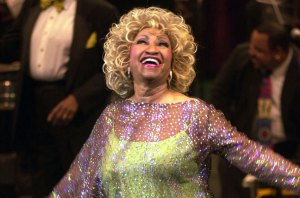
Image Credit: Ed Cox/AP/Shutterstock The undisputed eternal queen of salsa did exactly as she wanted throughout her extraordinary recording career, including with this bombshell of a track, the lead single and title track off her 59th album. Released in 2001, when Cruz was 76 years old, “La Negra Tiene Tumbao” was revolutionary as much for the age of its singer, as for its intoxicating mix of salsa with reggaetón and mid-section rap, which became the blueprint — to this day — for a number of recordings featuring much younger acts. The track also reveled in its exultation of black power and black beauty. Although it peaked at No. 4 on the Tropical Airplay chart, it wasn’t Cruz’s biggest single. But for a new generation, it was one of her most revolutionary. — L.Cobo
-
Maná, “Labios Compartidos” (2006)
“Labios Compartidos”, a gem from iconic Mexican band Maná, highlights the group’s ensemble work and their live instrumentation. Maná is the Latin rock group with most No. 1s on Hot Latin Songs, but “Labios”, from their hit album Amar es Combatir, was the most successful of all, spending eight weeks at the top in 2006, and also entering the Hot 100 in the pre-streaming era. The raspy voice of Fher Olvera, also the writer of the song, brings to life the heartbreaking story of a toxic relationship. The song stands as a testament to Maná’s global resonance over time, and the band’s ability to captivate listeners of all genres. — L.Calle
-
Don Omar & Lucenzo, “Danza Kuduro” (2010)
Don Omar was ahead of the curve when he stepped out of his comfort zone to release “Danza Kuduro” 13 years ago. For this 2010 banger, the Puerto Rican reggaetón artist reeled in French recording artist Lucenzo to musically and lyrically combine infectious worldly beats: Latin urban, Kuduro (a type of music from Angola) and Brazilian Lambada. Fearlessly breaking down genre and language barriers, the global appeal of “Danza Kuduro” is also reflected in its simple, catchy lyrics, in both Spanish and Portuguese, about dancing the night way. The track became Don Omar’s longest-leading No. 1 hit on Hot Latin Songs and Latin Airplay, spending 15 weeks on each chart between 2010 and 2011. — J.R.
-
Juanes, “La Camisa Negra” (2004)
The third single from Juanes’ third studio album, Mi Sangre, “La Camisa Negra” helped the Colombian rocker further internationalize his career, surpassing his previous hits “A Dios Le Pido” and “Fotografía” with Nelly Furtado and reaching new markets as far as Germany. On the Billboard charts, it spent 10 weeks at No. 1 on Latin Pop Airplay, and eight weeks at the top of Hot Latin Songs and Latin Airplay between March and April 2004. Written by Juanes and produced by Juanes, Gustavo Santaolalla and Aníbal Kerpel, the catchy tune – which fuses reggae, guasca, pop, rock and Colombian folk music from the Antioquia region – tackles heartbreak with wordplay and humor, with lyrics like “I’m wearing the black shirt and underneath is the deceased.” Juanes has told Billboard Español that he was inspired by the work of Octavio Mesa, “a peasant popular music singer who sang insulting the boss in the 60s, more punk and more rebellious than anyone… The most beautiful thing is that this peasant music from my region ended up being what made me universal in some way.” “La Camisa Negra” also ended up winning Latin Pop Airplay Song of the Year-Male at the 2006 Billboard Latin Music Awards. — S.R.A.
-
Daddy Yankee, “Gasolina” (2004)
Fueled by a maximalist EDM thump crafted by Luny Tunes, and fortified with the brutal rap bars of Daddy Yankee (also written by Eddie Avila), “Gasolina” stands as a quintessential reggaetón anthem, embodying the genre’s exhilarating power. As one of reggaetón’s pioneering global phenomena, the club hit not only catapulted Yankee to international stardom but also served as the introduction to the Puerto Rican genre for a worldwide audience. In 2004, it stormed the Hot 100 at No. 32, holding its ground for an impressive 20 weeks. The following year, “Gasolina” shattered barriers by securing the first-ever reggaetón song to earn a Latin Grammy nomination for record of the year, a groundbreaking achievement that solidified the genre’s place in global Latin pop. Earlier this year, in a historic moment, “Gasolina” took its rightful place in the National Recording Registry, cementing its legacy as the trailblazing reggaetón banger that reshaped the landscape of Latin music. — I.R.
-
Shakira, “Suerte” (“Whenever, Wherever”) (2001)
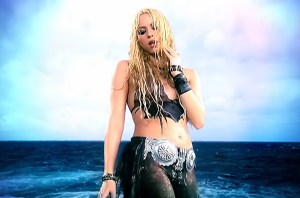
Image Credit: Courtesy Photo The first single off Shakira’s crossover album, Laundry Service, 2001’s “Whenever, Wherever” was simultaneously released in its Spanish version, “Suerte.” A mix of pop, Andean and global sounds, and aided by a video that highlighted Shakira the hip-swiveling dancer and cliff-diver, it peaked at No. 6 on the Hot 100, officially debuting the young Colombian star to the world. Shakira was already a star in the Latin world when she released “Whenever,” and her intense iconoclastic and personal lyrics transcended in their English version (in this one occasion, translated by her friend Gloria Estefan), with lines like “lucky that my breasts are small and humble/ so you don’t confuse ’em with mountains” still indelibly stamped in our collective consciousness. As Latins, we already knew and loved Shakira, but this was the song that introduced her to the rest of the world. — L. Cobo
-
Son By Four, “A Puro Dolor” (2000)
Who knew a boy band could be so poignant? The now-defunct Son By Four’s late-night phone call to an ex-lover literally brings us to tears when lead vocalist Angel Lopez pleads: “I have to see you, I feel like I’m dying.” “A Puro Dolor” spent 22 non-consecutive weeks at No. 1 on Hot Latin Songs in 2000, the biggest Latin single of that year. Penned by master songwriter Omar Alfanno and produced by Alejandro Jaen, it also benefitted from an English version (“Purest of Pain”), and even more so, from its ballad version, which showcased López’s voice with piercing pathos. — L.Cobo
-
Juan Gabriel, “Abrázame Muy Fuerte” (2001)
It’s not an easy task picking just one Juan Gabriel song for this list, but it’s safe to say that “Abrázame Muy Fuerte” moved the masses, with heart-wrenching and passionate lyrics that center around embracing our loved ones. A testament to Juan Gabriel’s extraordinary ability to craft deeply emotional lyrics that are both personal and relatable, he starts off the nostalgia-filled classic song with a delicate, whisper-like delivery, backed by a solemn piano tune and striking violin chords. The melody only builds as the song goes on – going from a stripped-down ballad to a powerful orchestral event, matching the urgency of the song’s vivid and sobering lyrics: “Embrace me, for time passes and never forgives.” One of the Mexican singer-songwriter’s most beloved songs from his hefty catalog, “Abrázame Muy Fuerte” spent nine weeks atop Hot Latin Songs in 2001. — G.F.
-
Café Tacuba, “Eres” (2004)
Mainly known for their tongue-twisting rockero anthems, such as “Ingrata” and “Chilanga Banda,” Café Tacvba’s seminal “Eres” is the opposite of complexity – both in its lyrics and musical production. It’s a straightforwardly simple, yet poetic, declaration of love (“You are my hope, faith and salvation”) that can evoke a range of emotions. Sung by Emmanuel del Real, the band’s keyboardist and melodica player, “Eres” is a delicate ballad — powered by aww-worthy lyrics and moody electric guitar, punctuated by a head-bobbing drumbeat that finds a person surrendering completely to an ethereal love. A single off the group’s Cuatro Caminos, “Eres” rightfully became the quintessential first dance song at every Latin couple’s wedding in the early 2000s. Along the way, this timeless classic also took Cafeta to mainstream awareness, scoring the iconic Mexican rock en español quartet their first entry on the Latin Pop Airplay chart in 2004, where it peaked at No. 38. — G.F.
-
Enrique Iglesias, Descemer Bueno & Gente de Zona, “Bailando” (2013)

Image Credit: AP Photo/Lynne Sladky, File Before “Despacito,” there was “Bailando,” the 2013 smash by Enrique Iglesias with Cuban singer/songwriter Descemer Bueno and Cuban duo Gente de Zona. The song spent 41 weeks at No. 1 on the Hot Latin Songs chart, a record at the time. Pre “Despacito,” “Bailando” opened the door to the possibility of blending pop, rap and reggaetón, marrying Iglesais’ up-tempo pop with Bueno’s singer/songwriter vibe and — the coup de grace — reggaetón beats and gritty vocals from Gente de Zona. The track, produced by longtime Iglesias collaborator Carlos Paucar, is still irresistible. Aided by a Sean Paul remix, it rose to No. 12 on the Hot 100, and its mix of pop and urban became the blueprint of the sound that dominated Latin music for the better part of the decade. — L.Cobo
-
Luis Fonsi & Daddy Yankee, “Despacito” (2017)
If there is a before-and-after for Latin music since the year 2000, it would be “Despacito.” The 2017 hit, written by Luis Fonsi, Erika Ender and Daddy Yankee, originally recorded by Fonsi and Yankee and later remixed with Justin Bieber, not only shattered all records, but unequivocally changed the way Latin music was perceived and eventually consumed globally in the streaming era. Released Jan. 13 of 2017 on Universal Music Latin, the now-ubiquitous song — with its instantly catchy “Des-pa-cito” refrain –exploded almost instantly, going to No.1 on Hot Latin Songs just three weeks after its release, where it held for a still-record 56 weeks. When Bieber jumped on the remix, adding a touch of English and a touch of Bieber to the mix, it soared to the top of the Hot 100 within a month, where it stayed for an astounding 16 weeks, tying Mariah Carey & Boyz II Men’s “One Sweet Day” for the all-time record of most weeks at No. 1 (a record that has since been broken).
Globally, “Despacito” continues to be a force of nature, shattering viewing records on YouTube; it currently stands as the most-watched music video of all time. It wasn’t only that no other Latin song, in history, has had that level of success: It was also everything that came in its wake. “Despacito” opened the industry’s eyes to the vast possibilities of music in Spanish, or bilingual music with the right song. It made it clear that, in the age of streaming, language was no longer a barrier for listeners hungry for new songs.
All that, however, started with the song itself, which Fonsi originally conceived of as a sensual, romantic pop track with Ender, his friend and regular writing partner. Producers Mauricio Rengifo and Andrés Torres added the reggaetón beat, which in turn led to the search for an urban voice that could contrast with Fonsi’s R&B balladeer croon. The perfect blend of urban and pop was born. And then, of course, the remix with Justin Bieber, and its blend of cultures. “Now, ‘Despacito’ sounds normal,” Fonsi said last year, of the mix of sounds that make it up. “But if you asked me four years ago, when I was mixing this cumbia with a guitar and with a Puerto Rican cuatro; when we mixed a pop artist with the King of reggaetón; when Justin Bieber did a remix… it all sounds normal now. But back then it wasn’t […] When I look back, what really hits me is the fact that it opened a huge door for the non Latin world to vibrate to Latin music.” — L.Cobo